
Schöneweide has changed a lot over the past few years. A visit to the area revealed that a number of these former industrial buildings have recently been, or are in the process of being, transformed into exciting art spaces. An investor bought the huge, rundown complex by the Spreeufer, with the aim of transforming them into exhibition spaces and artists’ studio: a plan which is steadily coming into fruition.
Olafur Elliason has already moved his studio there and the Canadian rockstar Bryan Adams is close to finish with his Berlin project “Spree Halle”: another complex of buildings that are planning to host studios for artists, galleries and music events.
Collector and patron Sven Hermann houses part of his collection in the industrial building next door, into the legendary Reinbeckhallen and some of his friends have already invited us to the first exhibition of an up-and-coming institution.
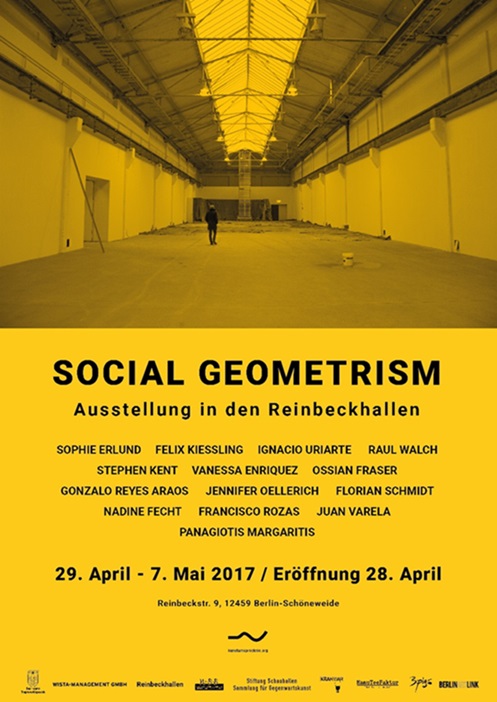
The title of the exhibition: Social Geometrism
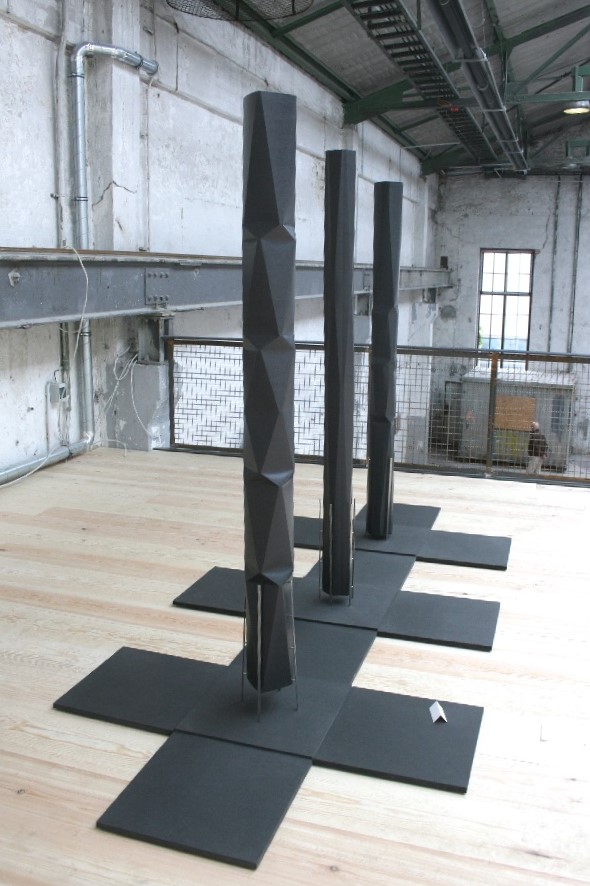
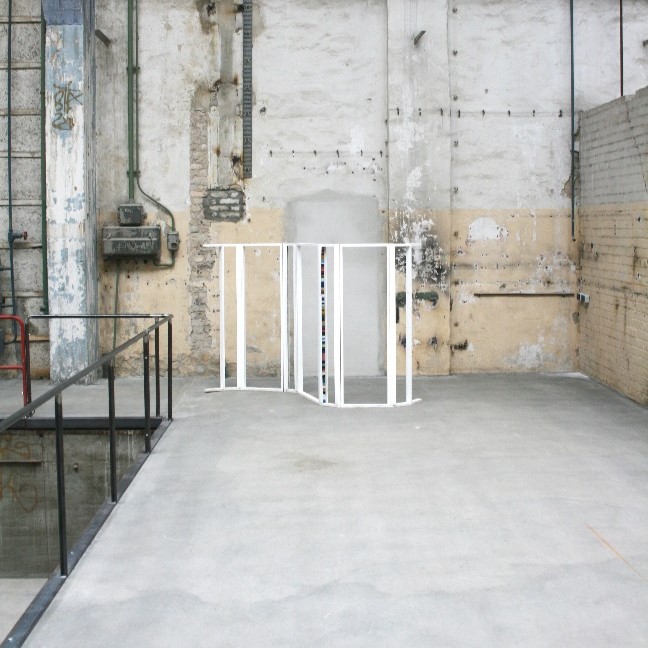
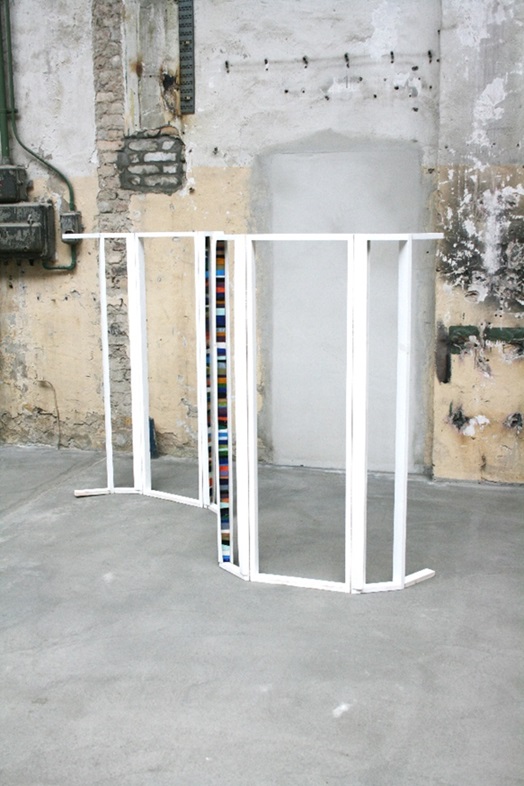
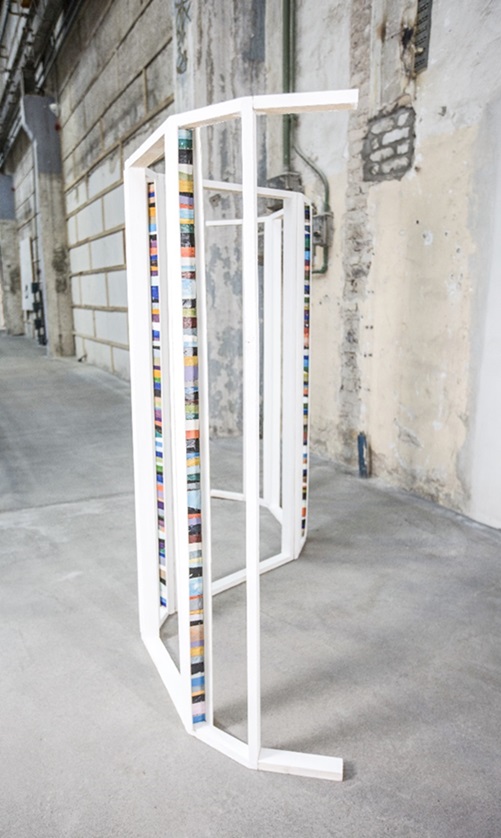
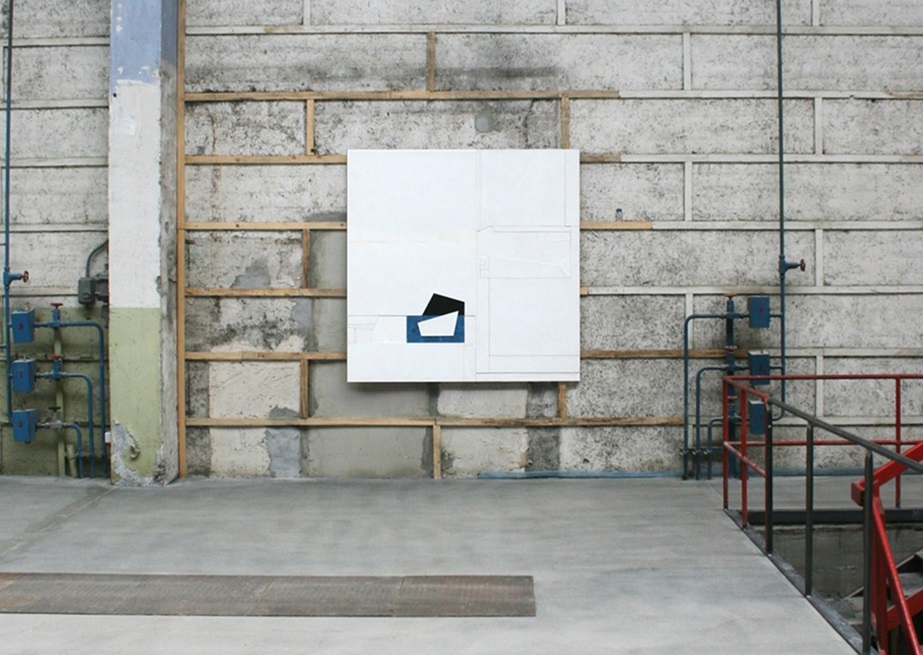
The concept is based on the work of US sociologist Donald Black, who made visual mappings of evolving social phenomena, composed of geometrical lines and shapes, clustered in particular areas. The exhibition map seems based on these designs, with a different geometric shape attributed to each artist. And the map is a real asset for navigating the space, because its industrial history is still very much on show. Platforms, switchboards, beams and pulleys are visible in the huge exhibition hall, and the walls are unpainted, revealing diverse materials and the wear and tear of past production. The contrast between this rough, industrial backdrop and the careful selection of the artworks epitomises the changes I witnessed in Schöneweide throughout the day. The juxtaposition is also exploited to great effect by the curators and artists, some of whom had the chance to make site-specific work.
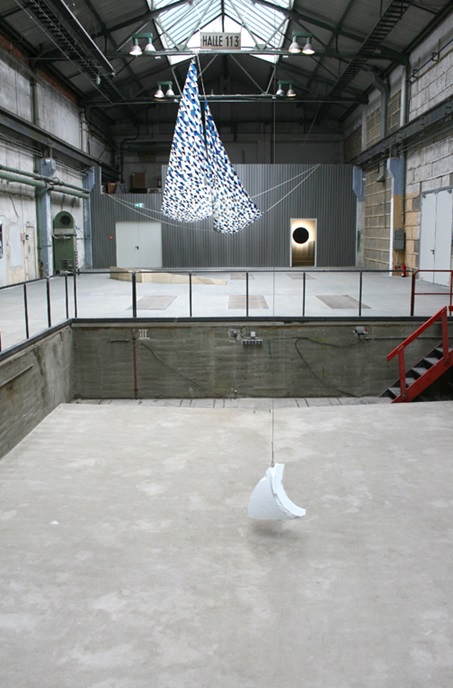
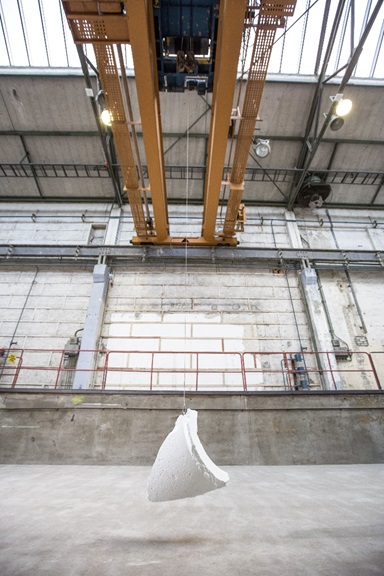
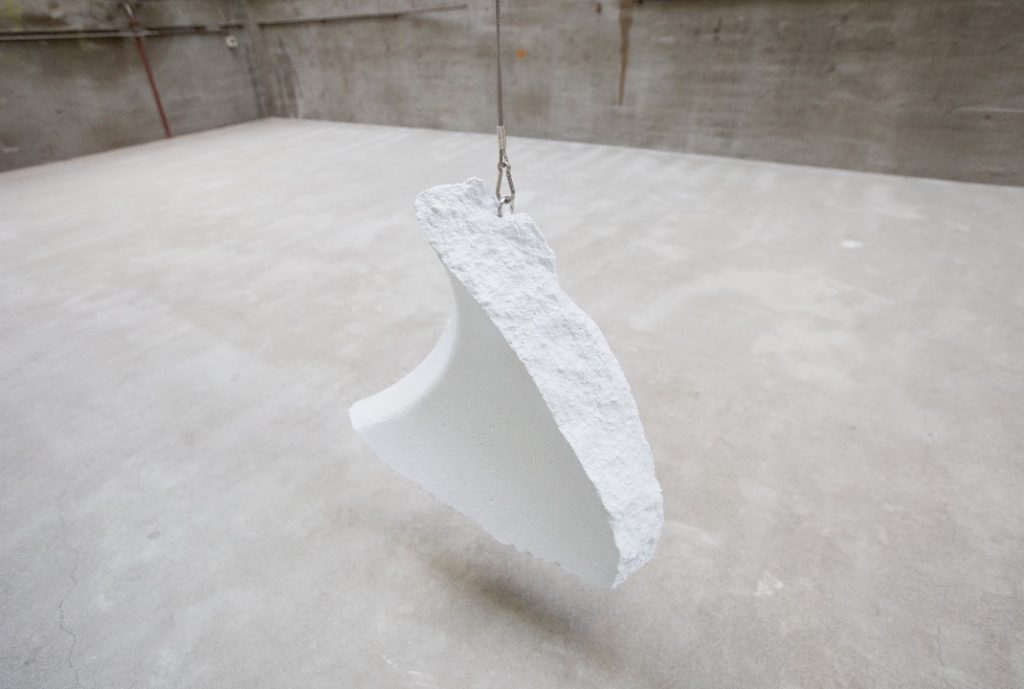
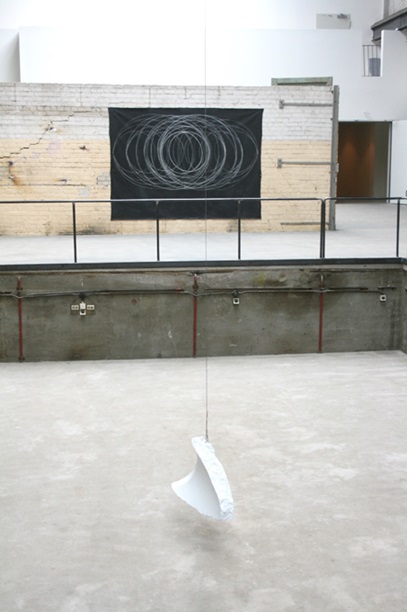
Ossian Fraser’s ‘Ceiling’ is a huge, round disk of rough plaster that looks a lot like it was just cut out of the building. Artist and curator Panagiotis Margaritis tells me that this was exactly the plan: Fraser wanted to bring ‘the inside outside’, to flip a section of the wall so that we could see what had been obscured and had no previous aesthetic value. In the end, Fraser could not get this idea past the builders, but his compromise—making the disk out of waste material from the renovation—involved the builders’ help.
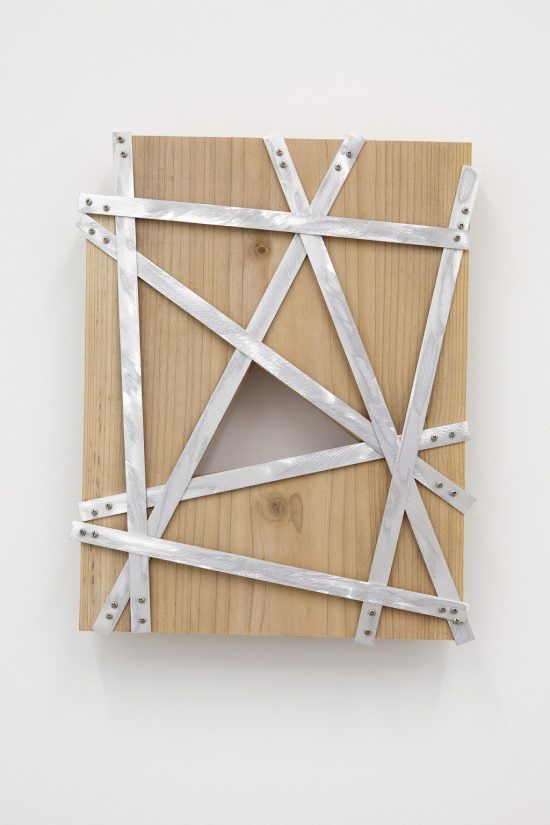
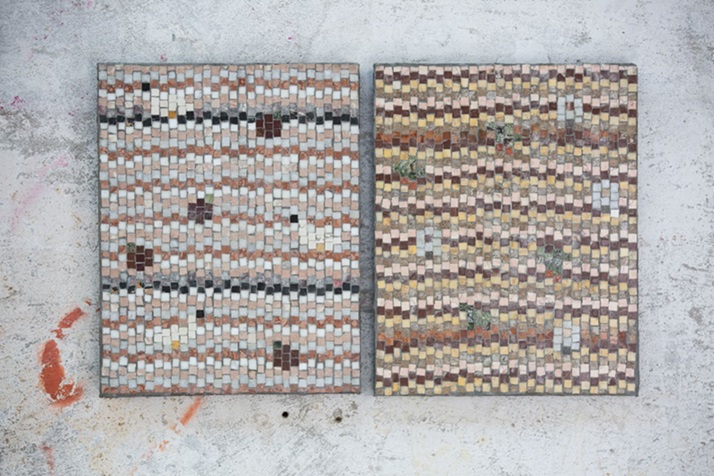
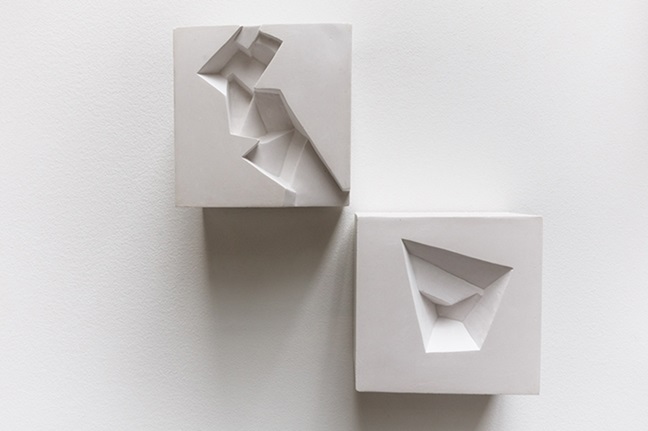
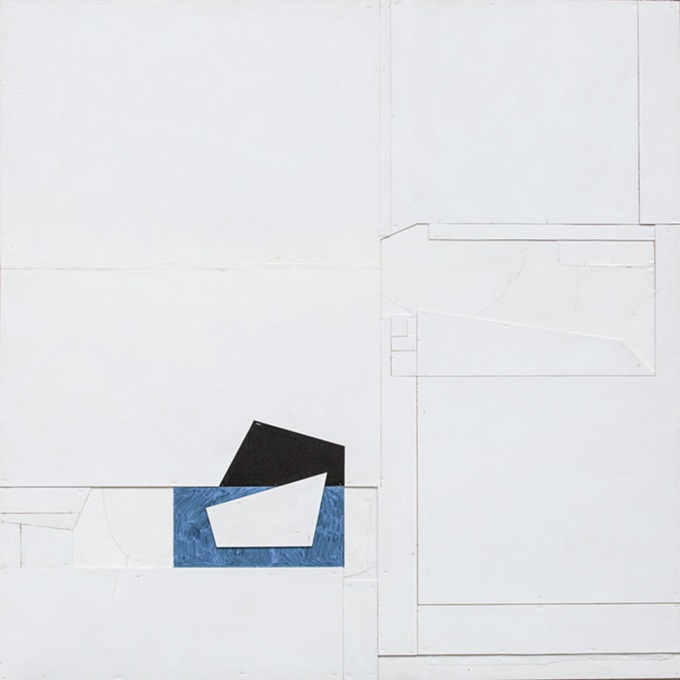
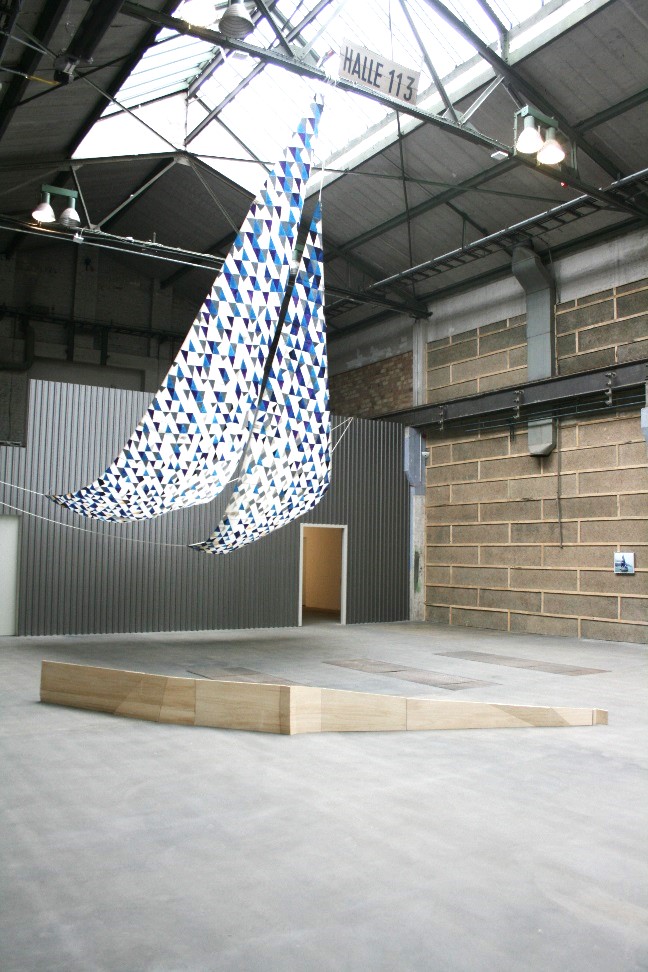
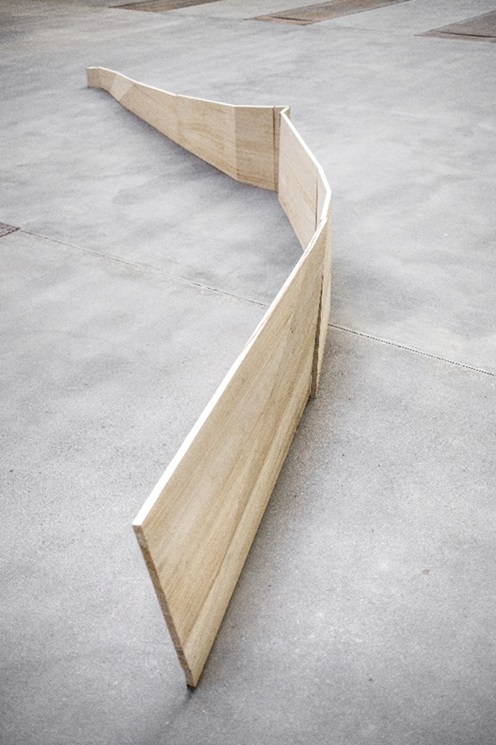
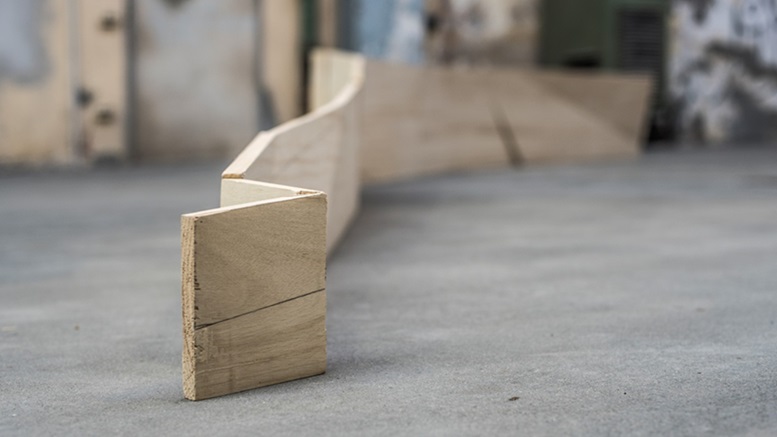
Danish artist Sophie Erlund’s piece, ‘A Gentle Monumentalism’, is a series of white plaster cubes containing 3D cutouts that look like moulds for large-scale production. In fact, they are tiny replicas of Soviet architecture, collected by the artist. Her numerous individual shapes are an unnerving counterpoint to the indivisible unity of Soviet philosophy. The exhibition is a coherent one, seizing on the new ways that people order their existences and exploring the spaces used to do that. Ignacio Uriarte’s painstaking folded paper sculpture has pathos in this exhibition space, so far from an office or a home -for those are familiar to his work. Jennifer Oellerich’s photograph is the product of a long exposure in the rain, so that the photo is an imprint of both light and water. Oellerich’s piece looks like an effort to imprint physical geography of a space, an added materiality. Juan Varela’s piece is calling us for play. Is a performance art by any two person that have to cross each other balancing on a long thin piece of wood without touching the ground criticising the limits of the human body! Near by, Gonzalo Reyes Araos presents a book full of patterns made out of dots. This book contains the whole png code that a computer reads in order to display the image on its cover. This image is a screenshot taken during a conversation between the artist and his mother who lives in Chile. Raul Walch‘s artistic practices continually invastigates the social potential of artworks. Flags and semaphores in geometric abstract colours are often placed in crucial spots. In abandon buildings, in refugee camps or at cultural or political institutions. In Reinbeckhallen we are having part of a previous activity. A document. Α sail that has been hung on the ceiling and waves from the breeze that can easily develop in such a space. His colourfull fabrics are just following the wind which the very act of looking becomes easily a meditation or a decompression -because his work do not try to explain these vast and margical spaces they inhabit- they poetically and simply ask the viewer to behold them. In this way the artist and activist questions the official narrative and social formations.
That large-scale exhibition deserves definitely more attention. The place was crowded at the opening and the energy that dominated the atmosphere was particularly electric. In my opinion, this had to do with both the relationship the artists had with each other and the experimental attitude they showed towards the space. At around 22:00, plenty of drinks were handed out to the audience while a DJ started playing the beat.
“Social Geometrism” is already a hit of the Gallery Weekend which is turning 12 this year and more than 100 shows are asking for attention!
Kristina J. Oswald












Artists: Sophie Erlund, Felix Kiessling, Ignacio Uriarte, Raul Walch, Stephen Kent, Vanessa Enriquez, Ossian Fraser, Gonzalo Reyes Araos, Jennifer Oellerich, Florian Schmidt, Nadine Fecht, Francisco Rozas, Juan Varela, Panagiotis Margaritis
Veneue: Reinbeckhallen Foundation, Collection for Contemporary Art, Berlin
Title: Social Geometrism
Curated by: Juan Varela & Panagiotis Margaritis
Project Manager: Spiros Acheimastos
Dates: April 29 – May 7 2017
©Reinbeckhallen foundation, Collection for Contemporary Art. Kunst am Spreeknie 2017